
The Complete History of Los Feliz: From Ranch Land to Hollywood Haven
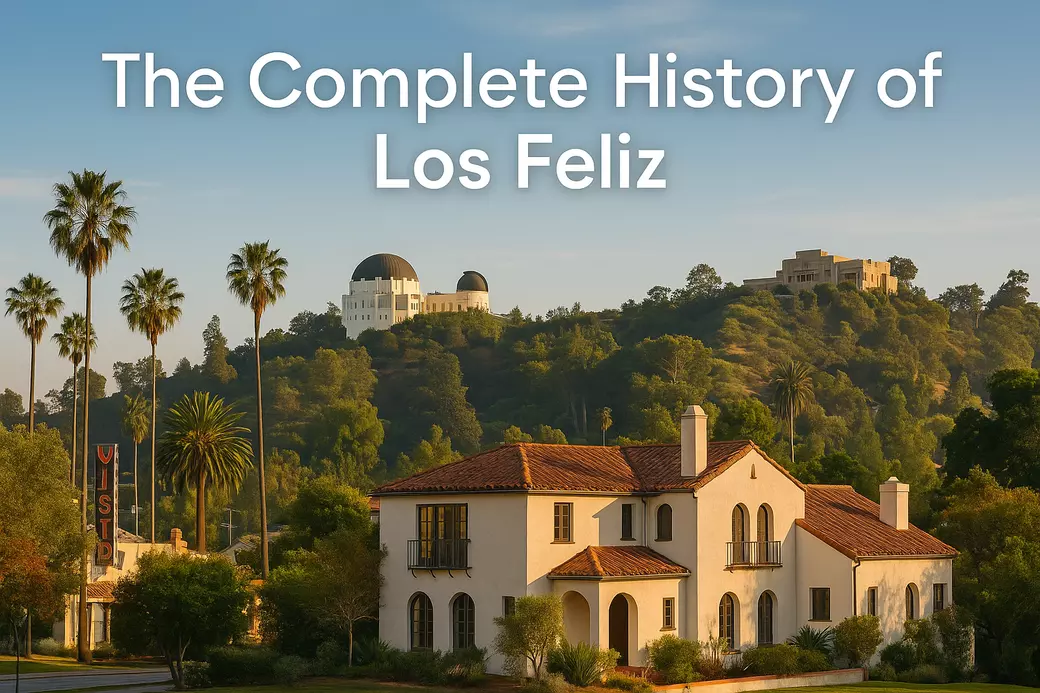
Introduction: Why Los Feliz History Matters
When you walk the tree-lined streets of Los Feliz today, it’s easy to see why so many call it home. From historic estates and charming Spanish bungalows to trendy cafes and Griffith Park’s trails, Los Feliz offers a lifestyle that feels both timeless and modern. However, behind this vibrant community lies a rich history that has shaped the neighborhood we know today. At Rooster Homes, we believe understanding the past helps us appreciate the present — and makes us even better guides for those who want to call Los Feliz home.
Early Roots: Rancho Los Feliz
The story of Los Feliz begins in 1795, when Spanish colonial governor José María Verdugo was granted nearly 6,700 acres of land known as Rancho Los Feliz. The name comes from Corporal José Vicente Feliz, a Spanish soldier whose family became one of the first prominent landowners in the area.
This expansive ranch spanned what is now known as Los Feliz, Griffith Park, and parts of Glendale. For decades, it was home to cattle, farming, and early Californio culture.
Griffith J. Griffith and Griffith Park
In the late 1800s, the land changed hands to a man whose name is inseparable from Los Feliz history: Griffith J. Griffith. A Welsh immigrant who made his fortune in mining, Griffith purchased over 4,000 acres of the Rancho and eventually donated more than 3,000 acres to the City of Los Angeles.
That gift became Griffith Park, now one of the largest urban parks in the nation. It’s home to the Griffith Observatory, the Greek Theatre, and countless hiking trails that Los Feliz residents enjoy daily. Griffith’s contribution laid the foundation for Los Feliz to become one of LA’s most desirable residential areas.
Development and Growth in the 1920s–1940s
As Los Angeles boomed in the early 20th century, Los Feliz quickly became a fashionable neighborhood. Developers introduced Spanish Colonial Revival and Art Deco homes, many of which still stand today as architectural gems.
During this time, Los Feliz attracted actors, artists, and musicians who wanted a retreat close to Hollywood studios. The neighborhood’s blend of hillside estates and walkable village streets made it uniquely appealing — a character it still maintains today.
The Hollywood Connection
Los Feliz has long been intertwined with Hollywood history. In fact, Walt Disney drew the very first sketches of Mickey Mouse while living in a modest house on Kingswell Avenue in Los Feliz. His first studio was also nearby, making Los Feliz a true birthplace of Disney magic.
Other Hollywood legends — from Cecil B. DeMille to Angelina Jolie — have called Los Feliz home. Its mix of privacy, character homes, and proximity to studios continues to attract the creative community.
Landmarks That Define Los Feliz
Several landmarks anchor the neighborhood’s identity:
-
Griffith Observatory – An icon of Los Angeles, offering stargazing, science exhibits, and city views.
-
Vista Theatre – A historic movie palace dating back to 1923.
-
Los Feliz Village – The neighborhood’s commercial heart, filled with cafes, restaurants, and boutiques.
-
Ennis House – Designed by Frank Lloyd Wright, this Mayan Revival masterpiece sits in the Los Feliz Hills.
These landmarks aren’t just tourist stops — they’re woven into the daily lives of Los Feliz residents.
Los Feliz Today: A Blend of Old and New
Today, Los Feliz is one of the most sought-after neighborhoods in Los Angeles. It maintains a balance between honoring its history and embracing modern trends. Residents enjoy:
-
Historic architecture alongside contemporary homes.
-
Locally owned businesses that keep the neighborhood authentic.
-
Outdoor living, with Griffith Park as an extension of their backyard.
This mix of old and new is why families, creatives, and professionals all find a place here.
Why History Matters for Homebuyers and Sellers
At Rooster Homes, we know that buying or selling in Los Feliz isn’t just about square footage or price — it’s about becoming part of a living story. Understanding the history of Los Feliz helps buyers appreciate the value of its homes and gives sellers a powerful way to highlight their property’s place in the community.
If you're exploring the neighborhood further, these guides provide a deeper look at Los Feliz living:
• Living in Los Feliz: Pros and Cons
• Best Streets to Live Near Los Feliz
• Los Feliz Village Neighborhood Guide
• Los Feliz Hills Neighborhood Guide (Homes, Lifestyle & Real Estate)
• Historic Architecture in Los Feliz: From Spanish Revival to Mid-Century Modern
• Los Feliz Landmarks: Must-See Spots in the Neighborhood
• Best Restaurants in Los Feliz: From Fine Dining to Local Gems
• Best Coffee Shops in Los Feliz: Neighborhood Cafés Locals Love
These resources help explain why Los Feliz continues to attract homebuyers who value both history and lifestyle.
Conclusion: Los Feliz Yesterday, Today, and Tomorrow
From its ranching roots to its Hollywood connections, Los Feliz has always been a place where history and culture intersect. As the neighborhood continues to evolve, its story only grows richer.
At Rooster Homes, we’re proud to serve Los Feliz with a “serve, not sell” approach. Whether you’re drawn by the architecture, the lifestyle, or simply the community feel, we’d love to help you write your own chapter in Los Feliz history.
FAQs About the History of Los Feliz
How did Los Feliz get its name?
The neighborhood is named after Corporal José Vicente Feliz, a Spanish soldier whose family was among the earliest landowners of the Rancho Los Feliz land grant in the late 1700s.
What was Rancho Los Feliz?
Rancho Los Feliz was a Spanish land grant covering nearly 6,700 acres, including what is now Los Feliz, Griffith Park, and parts of Glendale.
Who created Griffith Park?
Griffith J. Griffith donated more than 3,000 acres of land to the City of Los Angeles in 1896, creating what is now Griffith Park — one of the largest urban parks in the United States.
Why is Los Feliz known for architecture?
Los Feliz developed during several key periods of Los Angeles growth, resulting in a mix of architectural styles including Spanish Colonial Revival, Craftsman, Mediterranean Revival, and Mid-Century Modern homes.
Is Los Feliz historically connected to Hollywood?
Yes. Early Hollywood figures lived in Los Feliz due to its proximity to studios and hillside privacy. Walt Disney even drew early sketches of Mickey Mouse while living on Kingswell Avenue in Los Feliz.
Are there historic landmarks in Los Feliz?
Several notable landmarks help define the neighborhood, including Griffith Observatory, the Vista Theatre, Barnsdall Art Park, and the Frank Lloyd Wright–designed Ennis House.
Why do homebuyers choose Los Feliz today?
Many buyers are drawn to Los Feliz because it offers a rare combination of historic homes, walkable streets, proximity to Griffith Park, and a strong sense of neighborhood identity.
Rooster Homes
Brandon & Sarah Arlington
Los Feliz Real Estate Agents
📍 1800 North Vine Street
Los Angeles, CA 90028
📞 (323) 201-2724
🌐 www.roosterhomes.com
This guide was written by Brandon and Sarah Arlington of Rooster Homes, Los Feliz real estate agents who specialize in helping thoughtful buyers and sellers navigate the Los Feliz housing market, make confident real estate decisions through education, strategic negotiation, and hyper-local expertise.
Categories
- All Blogs (101)
- Buyers (46)
- Condominium's (4)
- Cornerstone Home Lending Blog Updates (2)
- Downtown Los Angeles (12)
- Home Owner Resources (12)
- Lending (4)
- Los Feliz, Los Angeles, CA 90027 (48)
- Rooster Cares (4)
- Rooster Homes Listings Blog (19)
- Sellers (21)
- Serving our Community (8)
- Trust and Probate (3)
Recent Posts
LOS FELIZ LISTINGS

6 Beds10 Baths11,000 SqFt
2000 De Mille DR, Los Angeles, CA 90027
MLS# 26828457
Listed by Jon Grauman of Resident Group


6,255 SqFt
2101 Hillhurst AVE, Los Angeles, CA 90027
MLS# 26847355
Listed by Bruce Jay of Bruce Jay Associates

0.52 Acres Lot
4510 Avocado ST, Los Angeles, CA 90027
MLS# 26847821
Listed by Bruce Jay of Bruce Jay Associates

7 Beds11 Baths9,482 SqFt
2331 Chislehurst DR, Los Angeles, CA 90027
MLS# 26874907
Listed by Shannon Scavo of MAISONRE
REVIEWS
Claudia Chan
Helped me rent a Condo home in Playa del rey, Playa del rey, CA.
Janet Sau Sum Cho
Bought a Single Family home in 2022 in East central, Pasadena, CA.